An idea for Gabbie.com
Turn family voices into a living archive
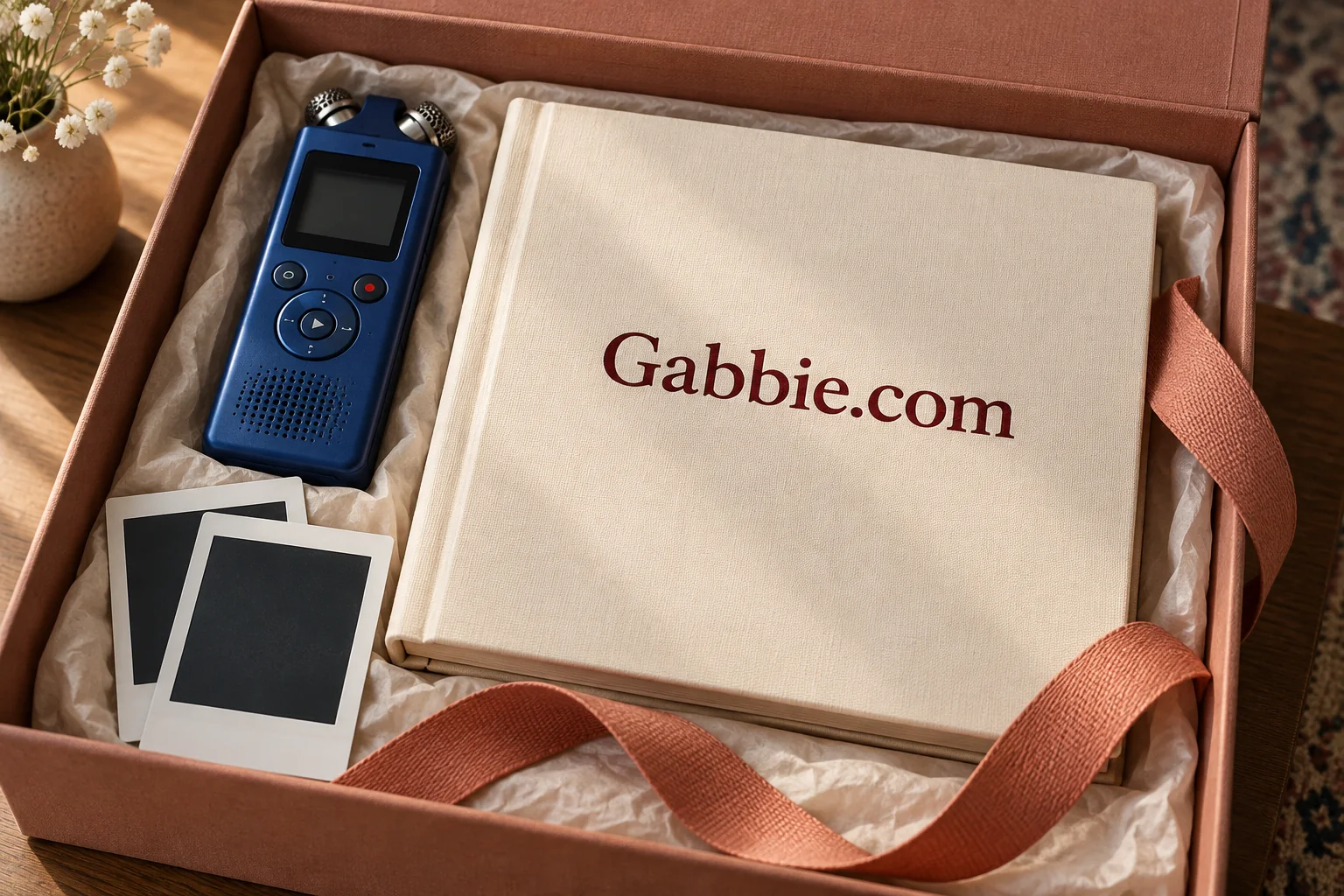
A written family history can preserve the sequence of events. A recording can also preserve a laugh, a pause, or the way someone tells a familiar story. A private audio archive could help families collect those details without asking everyone to become an interviewer or audio editor. Gabbie.com could be the home for that experience. This is an illustrative concept for a future buyer, not an available service.
Begin with one person and one collection
The first customer could be an adult organizing interviews with willing relatives. That organizer often needs a simple invitation, a manageable set of prompts, and a way to collect recordings made on different days. A useful first offer would help complete one small collection rather than ask the whole family to maintain a new social network.
The collection might contain five stories about a particular place: arriving there, an ordinary weekday, a favorite meal, a neighbor, and the day someone left. Place gives participants a shared starting point without demanding that they narrate an entire life. Each recording can stand alone, so a missed session does not make the project feel unfinished.
Make participation comfortable
The invitation should explain who created the collection, who can listen, and whether recordings can be downloaded. It should also say whether transcription or other processing is involved. A participant needs to understand those choices before recording, especially when the person organizing the archive is someone else.
Start with a question that is easy to answer in a few sentences. Offer an example of the type of detail that could be included, while leaving the actual story open. A participant might describe the smell of a kitchen or the route to school. The product should accept a short answer without treating it as an incomplete performance.
Shape a five-question journey
An initial journey could open with “What place would you like to remember?” The next screen asks who was usually there. A third prompt invites one ordinary routine. The fourth asks for a moment that still comes to mind. The final prompt lets the speaker add something the questions missed.
After each answer, show playback, a clear save state, and the option to record again. Keep the original recording separate from an edited version. At the end, let the participant review the collection title and the people who will have access. Sending an invitation and publishing a recording should be visibly different actions.
Organize for listening later
An archive needs more than a folder of audio files. Useful fields include the speaker, a date supplied by the contributor, the subject, and a brief description. Approximate dates should remain approximate. If a story refers to an event “around the summer of 1980,” a generated label should not turn that uncertainty into a precise date.
Transcripts make a collection easier to search and offer an alternative to listening. W3C's transcript guidance recommends identifying speakers and including meaningful non-speech sound. A transcript might therefore note a long laugh when it helps explain the exchange. It should also mark uncertain words instead of confidently filling gaps with invented details.
Keep sharing deliberate
The organizer and the speaker may have different preferences. One person might be happy to share a story with siblings but uncomfortable with a public link. Build access around named people and explicit choices. If a recording mentions someone who did not participate, provide a straightforward way to edit, restrict, or remove that section.
AI-assisted summaries would require a review step. The NIST guidance on human-AI interaction is a useful reference for planning human review and override points. In this concept, the contributor should be able to correct the summary before anyone else sees it. A polished sentence should never silently replace the speaker's actual account.
Offer a small, complete package
The first commercial offer could cover one collection, a fixed number of invited contributors, transcripts, and a downloadable export. A clear package makes storage obligations easier to explain than an open-ended promise to preserve everything forever. The service would need to state what happens when the subscription ends and how a family retrieves its material.
Distribution could begin with family-history groups and independent oral-history interviewers. A sample collection, made with explicit permission, would show the structure and playback experience. An interviewer could use the service to deliver a finished set of recordings to a family, giving the product a practical introduction through an existing relationship.
Treat preservation as an operating responsibility
The difficult work includes storage, backups, export formats, permissions, account recovery, and requests to remove sensitive material. A family should be able to recover its own recordings without depending on one person's inbox indefinitely. Decide how collection ownership can be transferred and how disputes between contributors will be handled before inviting large groups.
Gabbie.com could fit as a welcoming name for a careful recording ritual. Its role would be to make the first question feel approachable; the value would come from the stories and the control families retain over them. Prototype one five-question journey with willing adults, inspect every access choice, and complete an export. A buyer who wants to pursue this direction can describe that first collection in a domain inquiry.